Wedding Speeches and Toasts by Barbara Jeffery (1971)
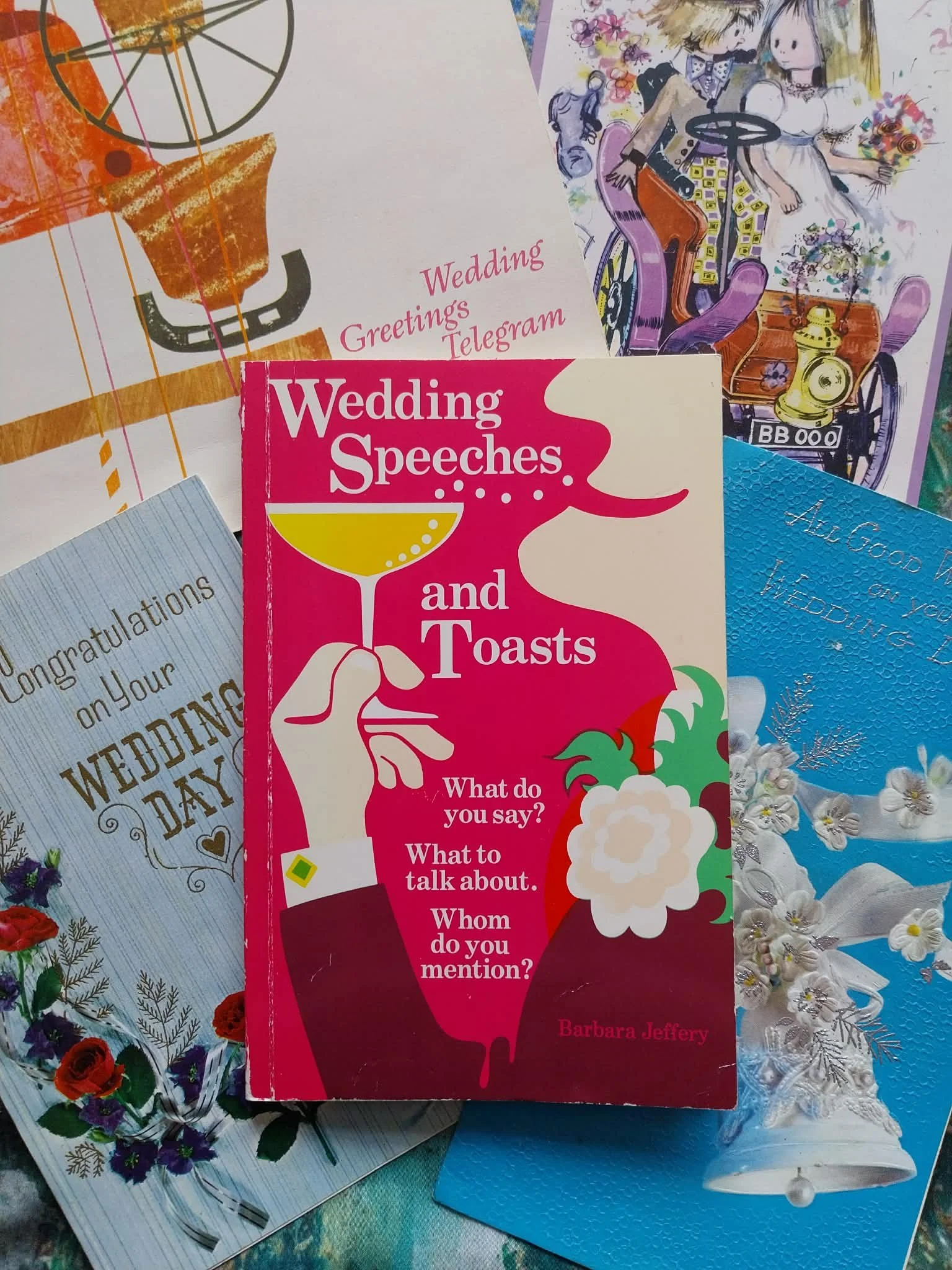
Wedding Toasts and Speeches was originally published by Barbara Jeffery in 1971, a guidebook on proper etiquette for the big day. It has been reprinted many times, having sold over 200,000 copies.
~
If you need any proof that I will read absolutely anything, behold this little book about matrimony I picked up in a local bundle recently. Marriage has never been something I’ve aspired to massively - whilst I appreciate it can be a way of consolidating a special bond if you meet the right person, I don’t think it’s necessary for a happy relationship, and I can’t see myself wanting to bind my soul to another for the rest of my life. There’s just too many possibilities out there.
~
What I love about books like this is that they’re the best at capturing social history; it’s incredible to witness how attitudes have changed over the years. The advice given is quite rigid and strict, back when there was protocol to be followed. A regimented order of proceedings, as one toast is returned with another. Ceremonies today are far more flexible, with less rules about who addresses whom and who actually gets to make a speech. While historically it wasn’t customary for a bride to say anything, modern receptions encourage the couple thanking those in attendance.
~
Barbara gives examples of what to say and what to avoid when speaking before an audience, which I’m sure is why this book was so successful because it’s a unique situation where we’re obligated by friendly or familial ties to be a confident orator, when often we’re not. Still, the author reminds us that surrounded by many we know, any expectation we feel is a burden we place on ourselves. Guests are usually too wrapped up in the happy atmosphere to worry about how proficient the speakers of the evening are, and this guide offers all the tools needed to make this responsibility less daunting.
~
Even though it may seem dated now, the text demonstrates how wedding traditions were already evolving by the 1970s - once comedic references were improper, but in the latter half of the 20th century it was quite common for jokes to appear. Divorces were uncommon before, but a final chapter dedicated to second marriages shows the topic is far less taboo than it once was. One thing that is a relic of the past is the wedding telegram, which was a faster way of sending correspondence before the age of text messaging and social media, usually to inform when someone couldn’t attend. You can see one of the telegrams my Nan received in this photo, when she got married in 1968.
~
By 2023 the marriage rate had fallen to just over 200,000, from 426k marriages annually in 1972. More couples are choosing to live together without marital ties, and many simply cannot afford the rising costs that come with modern ceremonies. Feminism has also changed the landscape, as women have fought the patriarchal roots of marriage and gained more freedom to live independently. Even in an ever changing age this book finds relevance, and is a fascinating look into a time when marriage held a greater significance.